
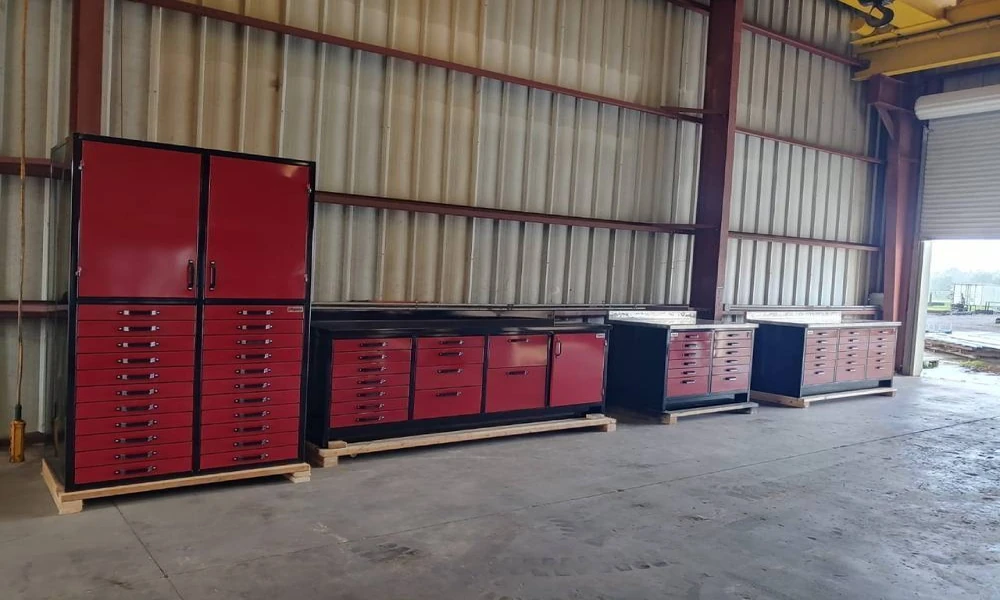
Heavy duty is a term used loosely enough in furniture listings that it often means little more than metal rather than plastic, without specifying the actual steel gauge, shelf load rating or locking mechanism that determine whether a cupboard genuinely suits demanding workplace storage. Understanding what heavy duty should actually mean in a heavy duty metal cupboard before buying prevents paying a premium for a label that turns out to describe an otherwise standard cabinet.
What Heavy Duty Actually Means in Gauge Steel
Steel gauge, the thickness of the metal used, is the specification that most directly determines genuine durability, with lower gauge numbers indicating thicker, stronger steel, and a cupboard described as heavy duty should state its gauge explicitly rather than relying on the term alone. A supplier unwilling to specify gauge is usually describing a cabinet no more substantial than a standard model sold at a similar price.
Locking Mechanisms Worth Paying For
A basic cam lock secures a cupboard adequately for low-value storage, while a genuine mortice lock or a keyed cylinder system provides meaningfully better security for higher-value or sensitive items, and the difference in build quality between these options is usually reflected clearly in price. Matching lock quality to what is actually being stored avoids overpaying for security a low-risk item does not need at all.
Shelf Load Capacity and Adjustability
Adjustable shelving that can be repositioned to suit different item heights adds practical flexibility over fixed shelving, but the stated load capacity per shelf matters more than adjustability alone, since an adjustable shelf rated for a lighter load still fails under the same weight a fixed heavy duty shelf would handle without issue. Checking shelf load capacity against the actual weight of items to be stored avoids a cupboard that looks robust but is not rated for the intended contents.
Ventilation for Chemical or Damp-Sensitive Storage
Cupboards storing chemicals, cleaning supplies, or items sensitive to humidity benefit from ventilation slots or a ventilated door design, which a fully sealed cupboard, however sturdy, does not provide. This is a specification easy to overlook when focused purely on material strength, but it matters considerably for certain types of workplace storage handled daily.
Sizing a Cupboard to the Actual Space
Measuring the intended location, including door swing clearance and any height restriction from ceiling fixtures, before ordering avoids a heavy duty cupboard that is structurally excellent but physically will not fit where it was meant to go. This is a basic check but one frequently skipped when a buyer focuses primarily on build quality over placement logistics.
Powder Coating and Corrosion Resistance
A quality powder-coated finish resists scratching, chipping and corrosion considerably better than a basic painted finish, which matters over years of daily use in a busy workplace where cupboards regularly get knocked, scraped and exposed to varying humidity. Asking specifically about coating type and thickness distinguishes a genuinely durable finish from a merely adequate one sold at a similar price.
Single Versus Double Door Configurations
A double-door cupboard provides wider access for bulkier items and is easier to organise visually, while a single-door design suits a narrower space and generally offers marginally better security since there is one less seam for forced entry. The choice depends more on the specific space and contents than on any general recommendation either way.
Where Heavy Duty Cupboards Get Placed in an Office
Placement near high-traffic areas benefits from a narrower, single-door format that does not obstruct movement when opened, while placement in a dedicated storage room can accommodate a wider double-door format without the same space constraint. Planning placement before finalising the cupboard’s exact dimensions avoids a mismatch discovered only once delivery arrives at the office.
Comparing Suppliers on Build Quality
Requesting steel gauge, load rating and coating specifications directly from more than one supplier, rather than comparing listings on price and appearance alone, surfaces genuine quality differences that a photo cannot convey. A supplier who readily provides these specifications in writing is generally more confident in their product’s actual quality than one who avoids the question entirely.
Delivery and Placement Logistics for a Heavy Item
A genuinely heavy duty cupboard is considerably harder to move than it looks in a catalogue photo, and confirming whether delivery includes carrying it to the final placement location, not just to the building entrance, matters more here than for lighter furniture. Some suppliers charge extra for placement beyond ground floor access, and clarifying this before ordering avoids an awkward situation where a delivery team leaves a heavy cabinet at the loading dock rather than in the storage room it was actually meant for, leaving staff to move it the rest of the way themselves.
Choosing the Right Cupboard for the Job
Choosing a genuinely suitable heavy duty metal cupboard means matching steel gauge, lock type and shelf capacity to what will actually be stored, rather than trusting the term heavy duty on its own. A cupboard specified this way costs a similar amount to one chosen on appearance alone but performs considerably better over years of daily workplace use.
